introduction: in the us cloud server hosting scenario, on-demand expansion and elastic billing have become the core strategies for cost control. this article explains the us cloud server hosting cost control techniques focusing on on-demand expansion and elastic billing, helping the operation and maintenance and financial teams to achieve an effective balance between resources and expenses.
on-demand expansion refers to dynamically adjusting the scale of computing resources based on real-time traffic and load; elastic charging is based on resource usage and time granularity. the combination of the two can achieve two-way optimization of service availability and cost efficiency.
hosting costs typically include items such as compute, storage, networking, backup and security compliance. the impact of on-demand expansion and elastic billing is mainly reflected in computing and network, so identifying the cost proportions is a prerequisite for formulating optimization strategies.
when implementing automatic scaling, you should configure scaling policies based on business indicators and set cooling and thresholds to avoid short-term fluctuations that lead to frequent scaling. a reasonable scaling strategy can balance performance and cost and reduce idle resources.
combined with load balancing, requests can be evenly distributed to the scaled instance pool to improve resource utilization. for peak scenarios, queues and caches are used to reduce the instantaneous expansion needs of the backend, thereby reducing the risk of billing fluctuations.
choosing the appropriate billing granularity (by seconds, by minutes, etc.) can significantly affect the refined management of expenses. you should also evaluate whether the billing model supports billing based on actual usage rather than pre-allocated resources to avoid long-term idle costs.
establish a comprehensive monitoring and alarm system to predict capacity based on historical trends and business calendars. through prediction, the resource pool size can be adjusted in advance to reduce high elastic billing caused by temporary acceleration.
storage tiering, lifecycle policies and data compression can reduce ongoing storage costs. on the network side, content distribution and traffic peak control are used to reduce bandwidth pressure, thereby reducing expenditures caused by traffic billing.
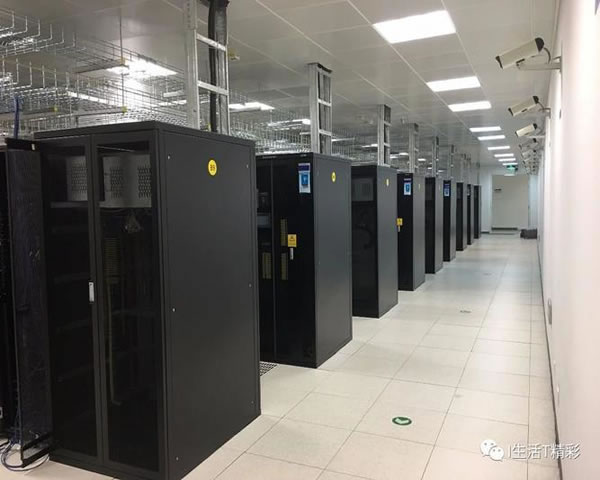
different regions in the united states have differences in data transmission, compliance, and latency. choosing the region closest to users and meeting compliance can reduce additional operating costs related to cross-region traffic and compliance.
regularly audit bills, set up cost centers and labels, and implement abnormal expense alerts to quickly detect abnormal consumption. establishing a monthly or weekly bill review process is necessary to control flexible billing risks.
adopting long-term or annual commitments on core long-term stable loads to reduce baseline costs, while using on-demand expansion for fluctuating loads, can take into account cost-effectiveness and elasticity requirements, and achieve cost structure optimization.
recommended implementation steps include: sorting out cost components, formulating scaling and billing strategies, setting up monitoring and alarms, performing bill audits, and continuing iterations. teamwork and policy implementation are key to implementation.
summary and suggestions: on-demand expansion and elastic billing provide flexibility and controllability for us cloud server hosting. by refining monitoring, optimizing scaling rules, managing billing granularity, and strengthening bill review, costs can be effectively controlled while ensuring business performance. it is recommended to formulate a phased implementation plan, conduct regular reviews and adjust the strategy based on actual business rhythm.
- Latest articles
- Player Guide: Filling In Server Address And Network Optimization Tips For Honor Vietnam Server
- Usage Experience Sharing How Can Cambodia VPS Save Operation And Maintenance Costs In Actual Projects?
- Case Sharing: The Improvement Of Operation And Maintenance Efficiency Brought By Thailand IDC Computer Room Hosting
- Evaluation Report: Is Vultr A Japanese Native IP? Performance Comparison With Other Providers
- How To Judge Whether Thailand Vps Can Meet The Stability Of High Concurrent Access After Purchase
- Industry Standards Interpretation Of Standards And Compliance Requirements Related To Network Cable Routing In German Computer Rooms
- How To Judge Bandwidth Stability And Delay Through Hong Kong Line Equipment Room Prices
- The Transparent Replacement Process And Cost Suggestions Help You Reasonably Estimate How Much It Will Cost To Replace A Server In Thailand.
- Stability Improvement: Hardware And Network Optimization Methods When Taiwan’s Native IP Is Often Disconnected
- How Small And Medium-sized Enterprises Can Use Vietnam Vps Cn2 To Reduce Overseas Operation And Maintenance Costs
- Popular tags
-

Backup And Recovery Of US Pet Server Data Disaster Recovery Strategies To Prevent The Risk Of User Content Loss
Data disaster recovery policy guidelines for U.S. pet servers cover risk assessment, backup design, recovery drills, storage and networking, encryption and access control, and monitoring automation to help prevent the risk of user content loss. -

Ranking Of Us Server Hosting Providers And Analysis Of Their Service Evaluations
this article analyzes the rankings and service evaluations of us server hosting providers to help users choose appropriate server hosting services. -

Detailed Explanation And Selection Guide For Server Hosting Fees In The United States
This article analyzes the US server hosting fees and selection guide in detail to help users better understand and choose the right server hosting service.